Why Jon's running for Ward 5
Ward 5 is already a great place to live.
There's still real work to make it better.
At the municipal level, the job is simple: take care of your roads, pick up your garbage, and do it well. Handle those things efficiently and the city is in a good place. And good leads to better. Right now in Guelph, the basics are slipping while your tax bill runs well ahead of your wages, and that is something a steady, disciplined council can fix.

Why Ward 5 specifically
Ward 5 is where Jon's Guelph story starts. He moved here in grade 5, and every school he went to after that sits inside this ward. The fuller version of that story (the schools, the teachers, the first paycheques, his family) lives on the About page.
The rest of what Jon's done in Guelph (a Guelph-based technology company, a Guelph-Wellington social-services board he chairs, a downtown business he and his wife run) has been spread across the whole city, not one ward. That's honest. But Ward 5 is the part of Guelph he knows best, because it's the part he came up in.
Jon's running for Ward 5 specifically because of what the next four years will decide. Thousands of new student beds are coming to the University corridors. The tree bylaw needs a permit process that actually works. Council will rule on project after project along Stone, Gordon, and College. The file-by-file specifics live on the Priorities page. The short version: these are the decisions that shape what living in your ward feels like in 2030, and he wants to be in the room for them.
Leanne Caron has represented Ward 5 since 2006, and Cathy Downer has served alongside her through three council terms. The work they've done on tree protection, downtown, and the University corridor has shaped the ward residents live in today. They have his thanks for that service. With Leanne running for mayor, the next four years will bring new files, and Jon's running because what he's spent twenty years doing, building complicated systems that serve people, is a useful thing to bring to those decisions.
The city Jon's running for
Guelph has every ingredient it needs to be one of the most livable mid-sized cities in Canada. The university, the downtown, an arts and music scene that punches above its weight, an industrial base that still makes things. Neighbourhoods you can walk in. A community that shows up for each other when it matters. Council's job is to be a steady, reliable partner to all of that. Make the basic services work first. Then get out of the way where residents are already doing well on their own. And step in carefully where council can make a difference for people.
How discipline creates room to invest
The best way to make sure Guelph has a real social safety net and the public services people rely on is to run a disciplined operating budget. When the operating side is tight and we're finding efficiencies, there is more than enough room for the programs that matter. When the operating side isn't tight, we end up cutting the things people need. No one votes for it; it just happens by attrition.
Guelph's tax bills have been climbing faster than inflation and faster than wages for years running. That is not sustainable, and it is not what you signed up for. The honest path forward isn't cutting the services you rely on. It's running the operating budget with discipline so we recover the room to invest. Which lines have the headroom, and where it goes, is the work Jon lays out on the Priorities page.
That's the lens Jon brings to every line on the city's books. This isn't about spending less for its own sake. It's about better spending, which is what gets council the room to invest in the things your neighbourhood is asking for. The dividend from recovering that room is what funds the housing, transit, downtown investment, and community programs that make this city worth living in.
The Hopewell way of working
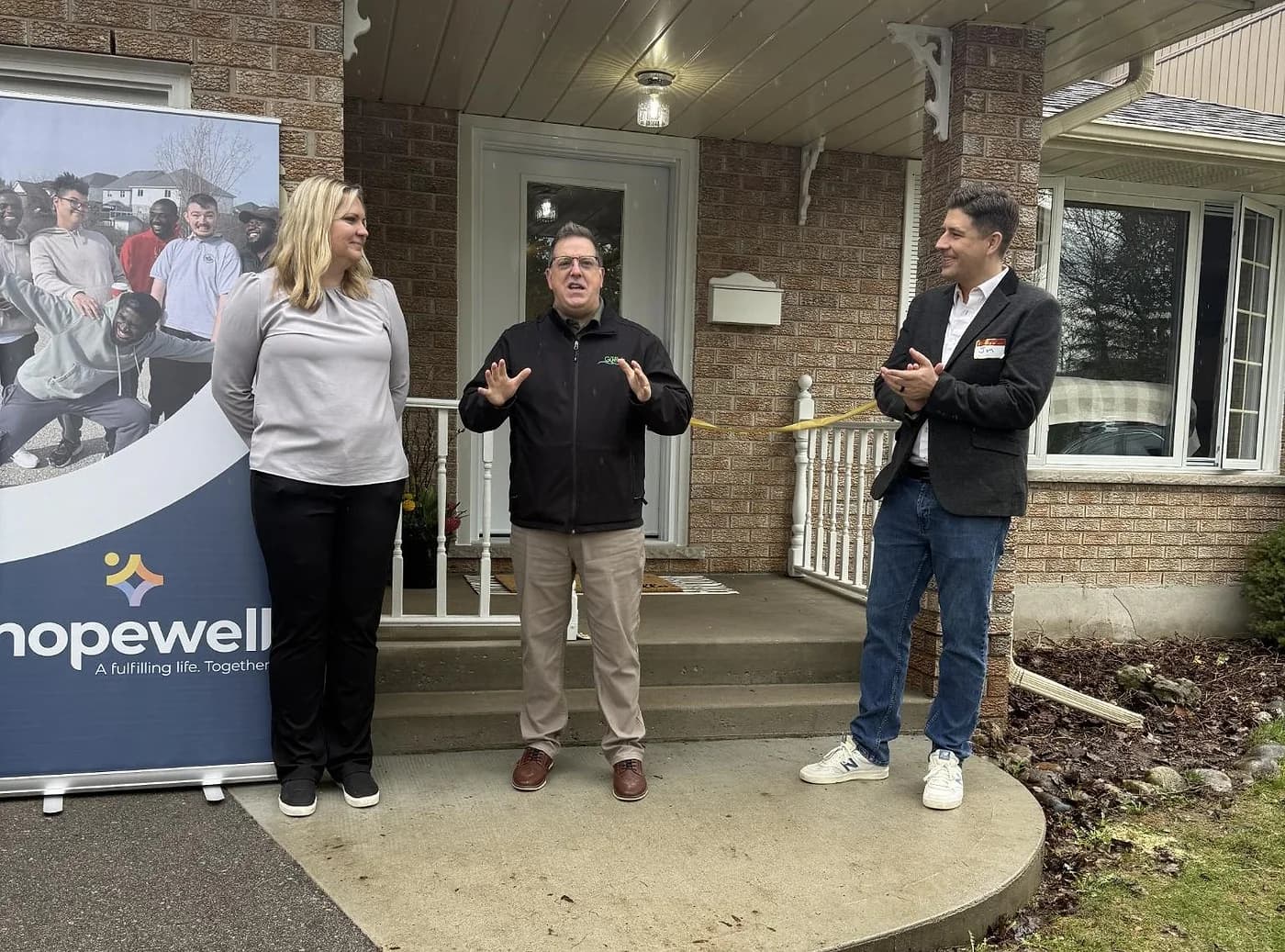
Jon has chaired the board of Hopewell Support Services, which works in developmental services across Guelph-Wellington. What that board pulled off with the province is a longer story. What matters here is what it taught him, because it's exactly how he'd work on council.
Listen to the people doing the work first: staff, residents, the partners in the funding chain. Learn how the system operates before you try to change it. Negotiate honestly with Queen's Park, the County, and whoever else is at the table. And when you have to vote, defend the call with numbers. It's slow work. It's also the work that moves things, the kind of progress that gets a family off a waitlist they never should have been on.
What Bidmii taught Jon
In 2020, Jon co-founded Bidmii, a Guelph-based technology company building a marketplace for home renovation. Bidmii sits at the intersection of three regulated systems: contractor licensing, consumer protection, and municipal building permits. Every week he's dealing with how those systems work together, or don't. That experience is not abstract. It maps directly to council work, where most of the job is figuring out how to make complicated overlapping systems serve residents well.
It also put him inside a serious regulatory framework for real. Because Bidmii holds homeowners' payments in trust, it's regulated by the Bank of Canada as a registered Payment Service Provider, and clearing that bar took a year of careful work with federal regulators. You can't fake your way through that. You read the rules, build to the standard, and keep talking to regulators when the rules and the operation rub against each other. The harder council files demand the same skill set.
The other thing Bidmii has taught Jon is what it takes to build something that lasts. Growth doesn't come from cutting expenses. It comes from being disciplined about the basics, which gives you the capacity to invest in what compounds. The same logic works for a city.
What council is for
Most of municipal work is operational, technical, and a little boring. That's exactly how it should be. The people who depend on council getting it right are mostly a little boring too. The parent waiting for paratransit. The small-business owner who just needs the sidewalk back. The family whose son or daughter has been on the developmental-services waitlist for years. The senior who needs her walk shovelled before Friday. Council that's focused on those people, instead of on whatever moment is about to go viral, is council doing its job.
What happens next
Election day is October 26, 2026. Between now and then, the plan is to talk to as many residents as possible. Jon will do more listening than talking. And he'll publish his thinking openly as he goes, so the people voting in October know exactly where he stands.
If any of this lands for you, the most useful thing you can do is sign up for updates below. The email list is how this campaign runs. It's where the conversation happens, instead of ads and slogans, with the people who'll be voting in October.