About Jon
Twenty years building things in Guelph.
Now running for Ward 5.
Jon Christensen came to Guelph in grade 5 and has built his whole working life around this city. He's board chair at a Guelph-Wellington nonprofit serving people with developmental disabilities and their families. He's a co-founder of a Guelph-based tech company that the Bank of Canada regulates. He and his wife own a small business downtown. Before all of that there was about twenty years in restaurant operations across Canada and internationally. Every school he went to growing up sits inside Ward 5.
It all serves one idea: applying business principles to build a sustainable community.

Guelph roots, in Ward 5
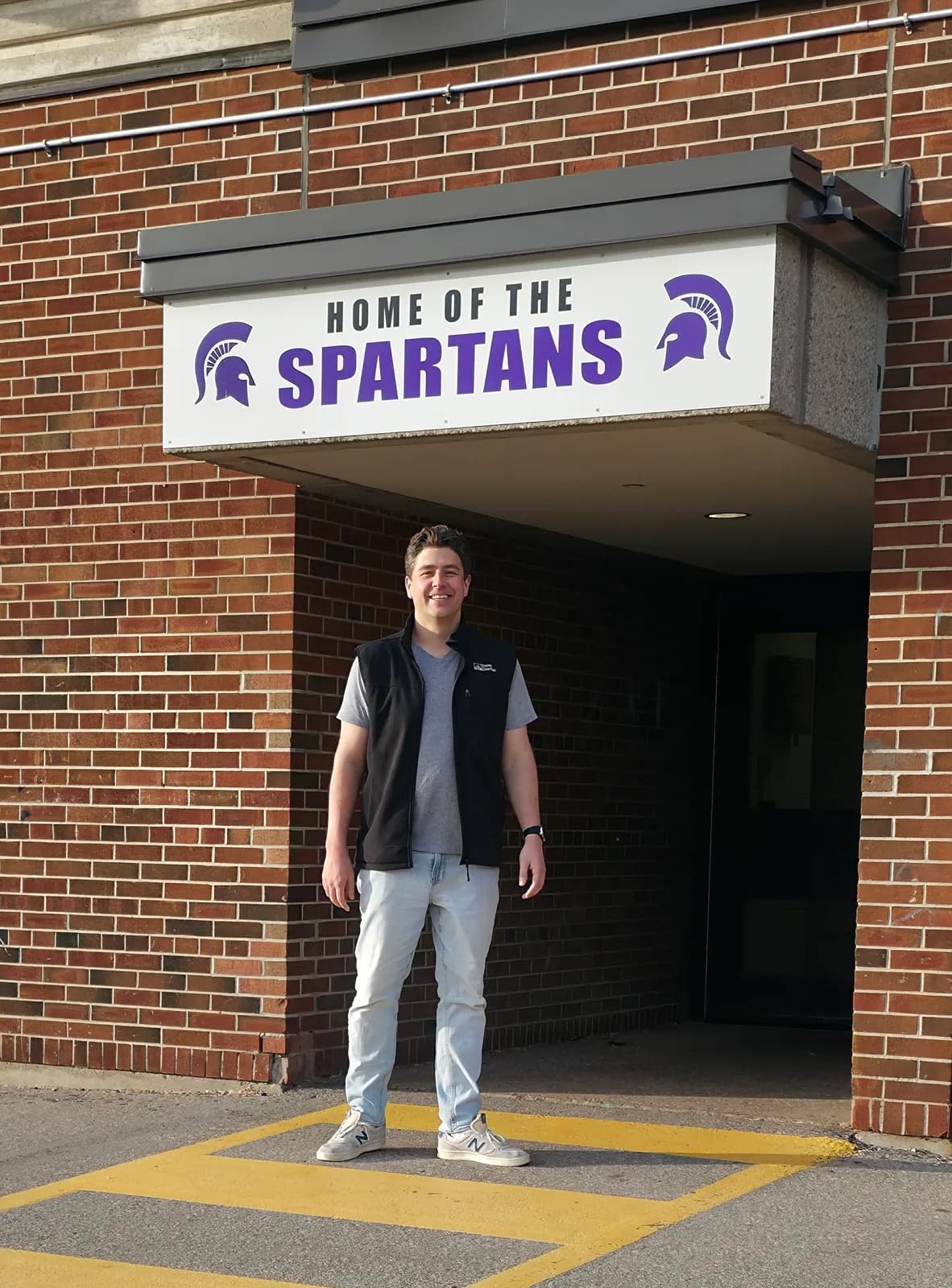
Jon moved to Guelph for his grade 5 year, and from that point on every school he went to was in Ward 5: University Village Public School for grades 5 and 6, then College Avenue Public School for grades 7 and 8, then Centennial CVI (Go Spartans), where he was treasurer of the student council. His first paycheque came from the East Side Mario's on Stone Road, where he worked as a pizza and salad cook. After high school he studied Hospitality and Tourism Management at the University of Guelph, in Ward 5, where he was on the student government and the debate team. He didn't finish the degree; by then he was already working full-time in the industry he'd gone there to study, and he never came back to it.
Jon's mom built her career at the University of Guelph over decades, as a professor in the Hospitality and Tourism Management program, and later as the founding Dean of the Lang School of Business and Economics. The university was always part of their family. It's where she went to work for thirty years, and where Jon ended up studying himself.
Ward 5 is the part of Guelph Jon knows best from the inside. He's been watching this ward change for thirty years: the Arboretum and Hanlon Creek trails, Stone Road Mall, the Speed River parkland, the corridors filling in along Gordon and Stone. These are routes he's been walking longer than most current residents have lived in the ward.
Jon and his wife also own a business in downtown Guelph, so they know the city beyond Ward 5 in a different way. They see what construction does to weekly revenue. They see how empty downtown feels at nine on a weeknight. And they know what it sounds like when a small-business neighbour quietly says they're closing up. That perspective doesn't come from briefing notes. It comes from showing up downtown every day.
Hopewell Support Services: what the work taught Jon
Hopewell Support Services (formerly Hopewell Children's Homes) helps children, youth, and adults with developmental disabilities live full lives in their community: supportive homes, respite for their families, day programs. It's some of the most meaningful work Jon has been part of. He's served on its board for more than five years across Guelph-Wellington, the last three as chair, elected by the rest of the board after a couple of years of doing the work alongside them.
Developmental services has always struggled for resources, and the funding behind it is layered and complicated. The board took the time to learn how the whole system works: the funding envelopes, the reporting requirements, and where the room was to put Hopewell on sustainable footing.
When Jon joined Hopewell's board, the funding flowing from the province hadn't kept pace with the growing complexity of the needs families brought to it. The easy move in that position is to lobby louder. The board chose differently. They worked to fully understand how the funding system worked, found the room inside it, and made the case to the Ministry for a sustainable share of what they needed.
The board then spent over a year working with the Ontario Ministry of Children, Community and Social Services to align the funding with how Hopewell operates on the ground. It wasn't a special deal. They just kept showing up, kept asking questions, and kept making the case until the right pieces lined up. Today, Hopewell is growing. It opened a new home in Ward 5 this April, with more in the pipeline as it works alongside the City of Guelph and the County of Wellington. It's also taking people off the waitlist. In developmental services, that waitlist is the most important number there is. Moving it is what progress looks like.
Firehouse Subs, and the year they nearly went bankrupt
Before the pandemic, Jon and his wife opened a Firehouse Subs restaurant in Guelph's south end. He was Vice President of International Growth at St. Louis Bar & Grill, traveling to Florida to close the first deals of their US expansion. His wife ran the restaurant day-to-day. Here is what happened next, in his own words:
“Then COVID hit. I got laid off. Restaurant sales dropped 40% overnight.
“The decision in front of us came down to two options. Sell the house and keep the restaurant open. Or shut down the restaurant, declare bankruptcy, both get jobs, and keep the house. The worst case for option one was moving in with my mom, and honestly, that wasn't a bad worst case. She has a big house, the relationship is a good one, and we'd have made it work.
“We chose option one. The reason was the employees: people who were breadwinners for their families. Shutting the restaurant meant putting them out of work in the middle of a pandemic. That wasn't actually a choice.
“We listed the house. We got an offer. We were about to accept. Just before signing, the federal government announced pandemic support for individuals and small businesses. We pulled the listing and rolled the dice one more time.
“My wife (credit to her ‘do whatever it takes’ attitude) ran the restaurant through everything. We had already invested in third-party delivery apps, so takeout sales scaled to fill the dine-in gap. Two years of the best sales we could have imagined followed. When a buyer approached us as the world reopened, the timing was right. We sold and went out on a high note.
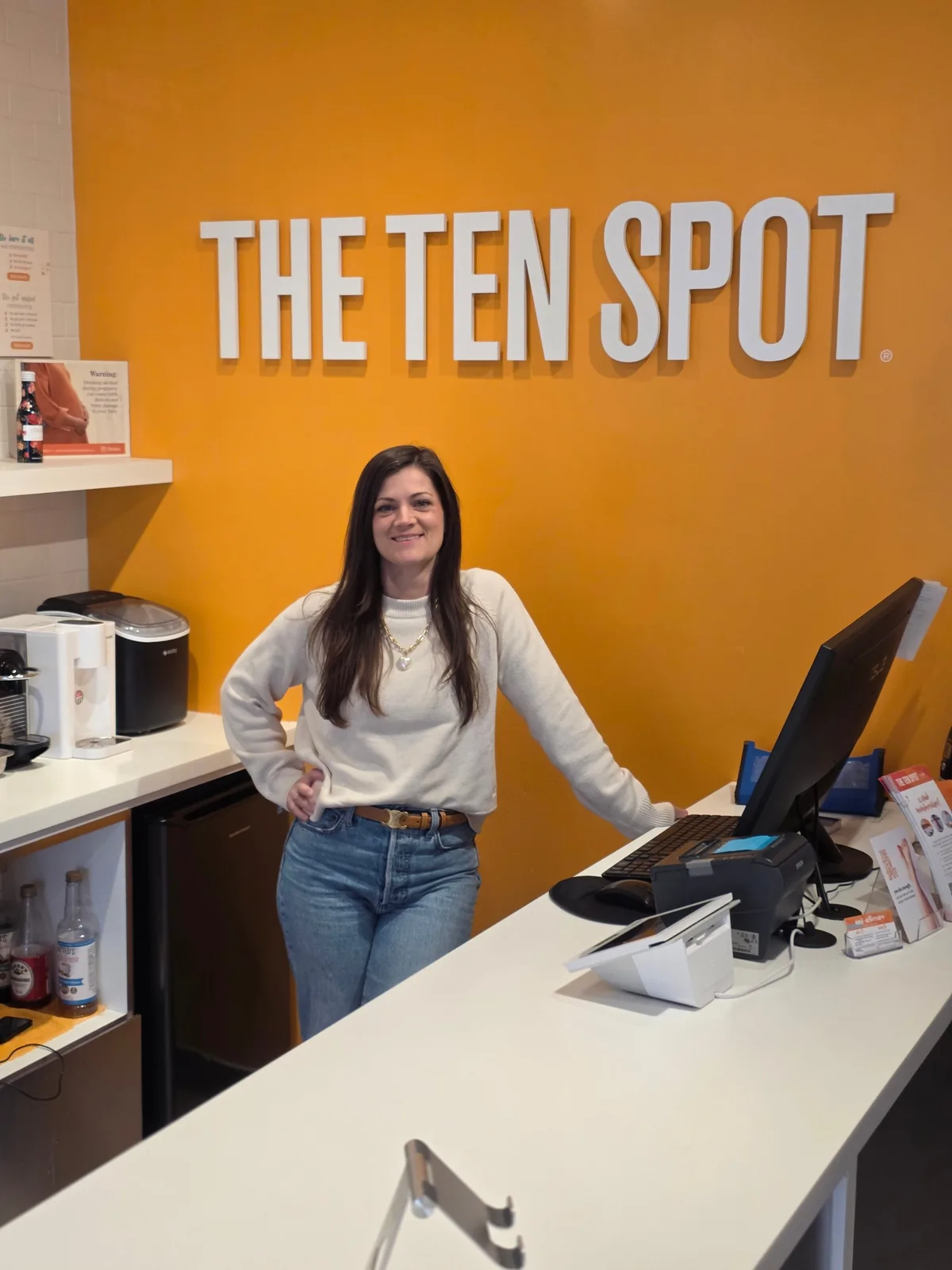
“After Firehouse Subs, my wife took a year off. Then we bought The Ten Spot in downtown Guelph. She runs it. The downtown construction is brutal. We feel it in revenue, week after week. Fortunately our business has the support to survive. A lot of our neighbours don't, and we're keenly aware of it. So many downtown businesses are closing or leaving, and I'm surprised the city hasn't done anything in the way of property tax relief for the building owners and the businesses bearing the brunt of the work. There isn't a silver bullet here, but it's part of the lens I'll bring to council.”

Bidmii
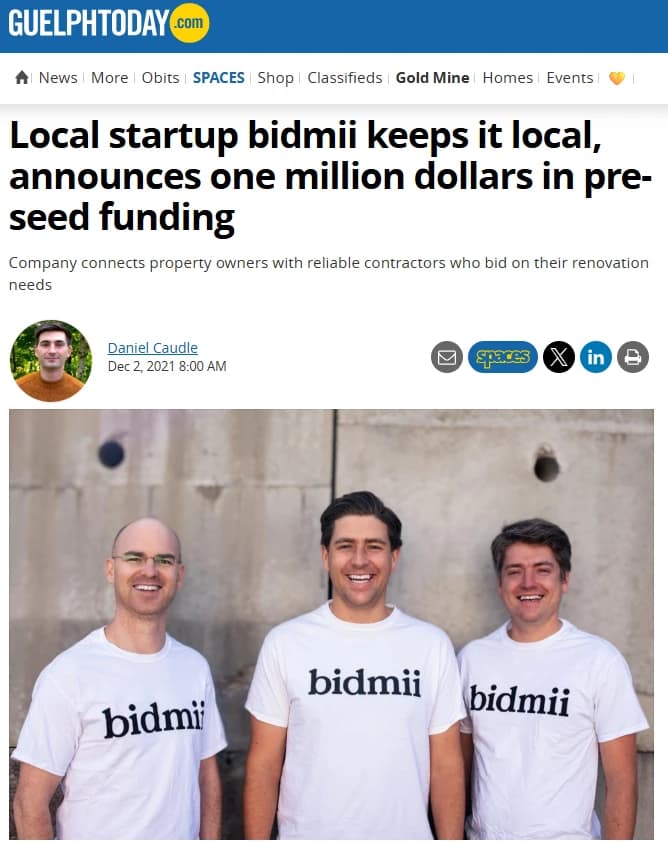
In 2020, Jon co-founded Bidmii. The company built a marketplace for home renovation that holds homeowners' payments in trust and only releases them milestone by milestone as the work gets done. Homeowners get transparent estimates and a way to resolve disputes without losing their minds. Contractors get pipeline they can count on and protection against scope creep. That same in-trust guardrail is what puts fraud artists out of business, because there's nothing for them to walk off with. The whole idea was to make home renovation feel less like an act of faith.
Because of that in-trust payment model, Bidmii is regulated by the Bank of Canada as a registered Payment Service Provider. Clearing that bar took about a year of careful work with federal regulators. That's part of what Jon would bring to council: hands-on experience operating inside a serious regulatory framework, rather than just talking about one.
The company graduated the Google for Startups Accelerator Canada in 2023. The same year, Jon was named Most Philanthropic CEO at the Tech4Giving Awards, the recognition by Tech for SickKids, the initiative that mobilizes Canada's tech community to raise money for The Hospital for Sick Children. A major funding round was led by Scott McGillivray (HGTV host and University of Guelph alum), with Andre Belisle (owner of JL's Home Hardware Building Centre in Guelph) joining as an investor. The company's head office is in Guelph, and it pays taxes here. Bidmii also established the bidmii Bursary for Women in Skilled Trades at Conestoga College.
Bidmii sits at the working intersection of municipal permitting, contractor regulation, and consumer protection. Six years of running the company has put Jon inside all three of those systems every single week. That's the kind of operational knowledge council work runs on.
Before that, twenty years in operations
His first paycheque came from East Side Mario's on Stone Road, as a pizza and salad cook. From there he worked nearly every position a restaurant has (dishwasher, line cook, kitchen manager, host, server, floor manager) before moving into multi-unit operations. He and his wife have also owned restaurants themselves; the Firehouse Subs story above is one of them. So when Jon talks about hospitality and small business in this city, it isn't theoretical. He's done every job in the room.
Between Firehouse Subs and The Ten Spot, Jon has been on the hiring side of the counter too. A lot of young people in Guelph earned their first paycheque working for him and his wife, the same way someone once handed Jon his.
Across about twenty years in the industry, roughly fifteen of them were in multi-unit restaurant franchising, real estate, design and construction. VP International Growth at St. Louis Bar & Grill. VP Store Development at Freshii. Work with Boston Pizza, Cora, Extreme Brandz, and the GUS Group. Recognized as one of the Ontario Hostelry Institute's Top 30 Under 30 in 2012.
Twenty years of that work taught Jon one thing above all: how to make complicated operational systems actually work for the people inside them. The customers, the teams, the partners, the businesses that depend on them. Council is the same job at a different scale.
Closer to home
Jon and his wife are raising two daughters, Penelope and Aurora, in Guelph. A few years ago their school's playground was tired and overdue for attention. Jon joined the parents' council, families rallied, they leaned on the board until it did the maintenance that brightened the whole yard, and they ran the fundraisers that paid for a new play structure.
Jon has since rotated off that committee, and that is the part he is proudest of. “It didn't need me. The effort is still going today, and it's stronger than ever. That's the goal with anything worth doing, in business or in a community: build it so it stands on its own once you step back.”