It's owned one since 1910. Last year it made $2.4 million, spent nothing on trail crossings, and closed one people had walked for years by putting up a sign.
Wore my Biltmore out to the Calgary Stampede this month. Guelph made hats under that name for ninety years. By 1957 the plant here was turning out more than 2,400 a day, more than a third of every hat made in Canada, with up to 350 master hatters on the floor.
They backed the junior hockey team, too. The Guelph Biltmore Mad Hatters took the Memorial Cup in 1952.
Long way from home, but it's a good name to have on your head.
The railway Guelph owns
It's called Guelph Junction Railway. The City's owned it outright since 1910, it hauls freight, and last year it turned a profit of about $2.4 million.
Here's the part that gets me. That same year it spent nothing on crossing equipment or bridge work. The year before it spent more than $700,000 on those exact things. It did rehab a road crossing for cars in 2025 - but on trail crossings, not a dollar.
And in that same year, it closed a well-worn crossing on the Radial Line Trail, out by the Guelph Innovation District, that runners and cyclists and families had crossed for years. It closed it with a sign.
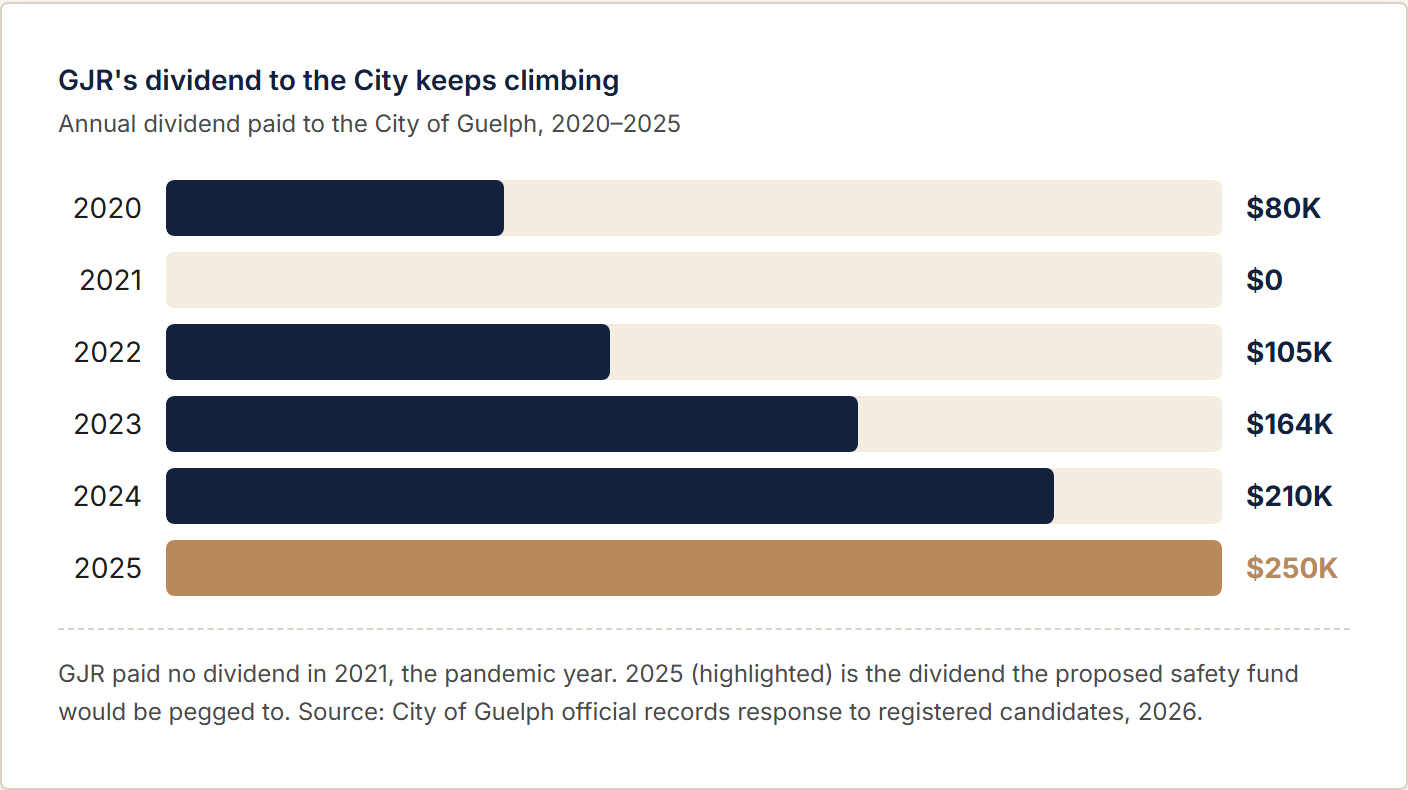
The Guelph Hiking Trail Club and the Guelph Off-Road Bicycling Association packed a council meeting over it in June. Councillor Rodrigo Goller got it on the agenda and got three parts of his motion passed. The part that tied the railway's money to safety work got ruled out of order - council, sitting as the railway's shareholder, can't just redirect money the City's already counted on. Good instinct, wrong tool.
So Jon pulled the records. Five years of audited financial statements out of the City Clerk's office, and a motion drafted to survive the ruling that killed Goller's.
Here's the fix. The money the railway already hands the City every year stays exactly where it is. Not a cent of it moves. On top of that, the railway sets aside a second payment, and it can only ever be spent on one thing: safe, legal trail crossings on its own line. The trail clubs get a real say in which one gets fixed each year.
No tax increase. It comes out of the railway's profit, not the City's budget.